


People often ask us the same question in different forms: When should I come if I just want a quiet stay by the river? It’s a fair question, because Rishikesh isn’t one consistent experience year-round. The river changes width and sound, the crowds shift dramatically depending on the month, and what feels peaceful in December can feel completely different in July. Here’s what we’ve actually observed, season by season, rather than the generic “anytime is a good time” answer most travel sites give.
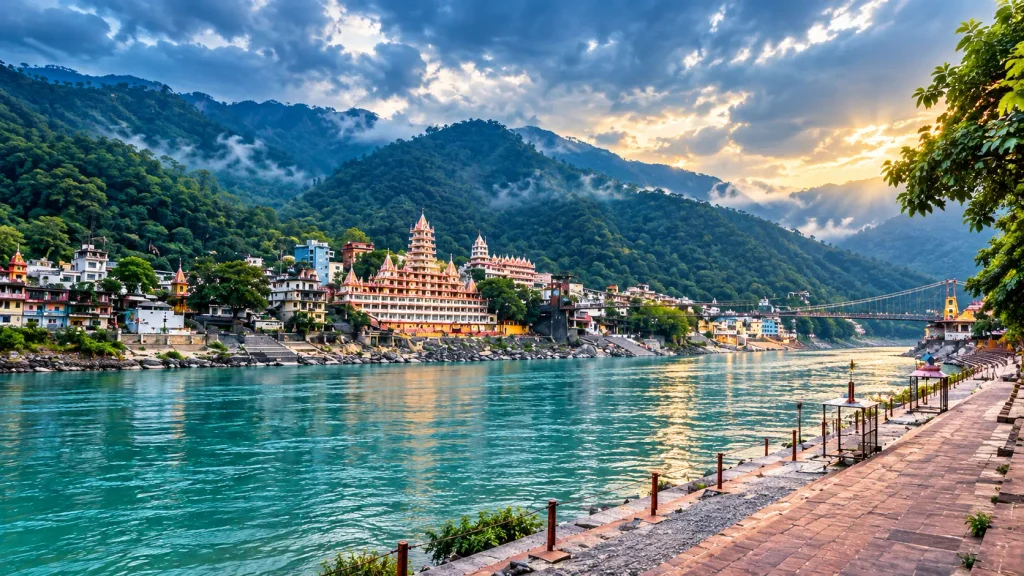
Rishikesh Has Three Distinct Seasons, Not Two
Most travel guides simplify Rishikesh into summer and “winter, but there’s a third season that matters just as much for anyone planning a riverside stay: monsoon. Each one changes the river itself, not just the weather around it.
Winter (October to February) – Cool, clear days, calm river, and generally the most popular stretch for tourism, including peak wedding season.
Summer (March to June) – Warmer days, a narrower and gentler river, and a noticeable dip in crowds compared to winter, especially in the shoulder months.
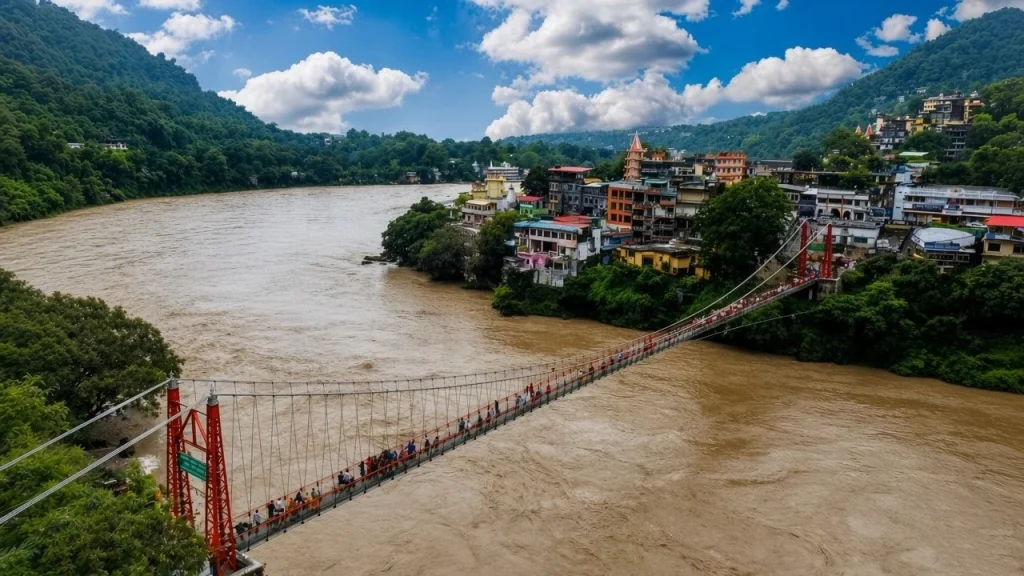
Monsoon (July to September): Heavy rainfall, a significantly wider and faster-moving river, and the quietest months for tourism by a clear margin.
Month-by-Month: What to Actually Expect
October to November
This is when Rishikesh transitions out of monsoon and into its most comfortable stretch. The river has usually settled back to a calmer flow by mid-October, days are warm without being hot, and evenings turn pleasantly cool. This is also when wedding season typically picks up, so expect more activity around venues and higher demand for riverside rooms with views of ceremonies happening along the ghats.
December to February
Peak season. Clear skies, cool mornings, and the calmest, clearest water of the year, since there’s been no rain to stir up the river for months. This is genuinely one of the best windows for a peaceful Ganga-side stay, but it’s also when hotels fill up fastest and prices climb, so booking well ahead matters more here than in any other season.
March to April
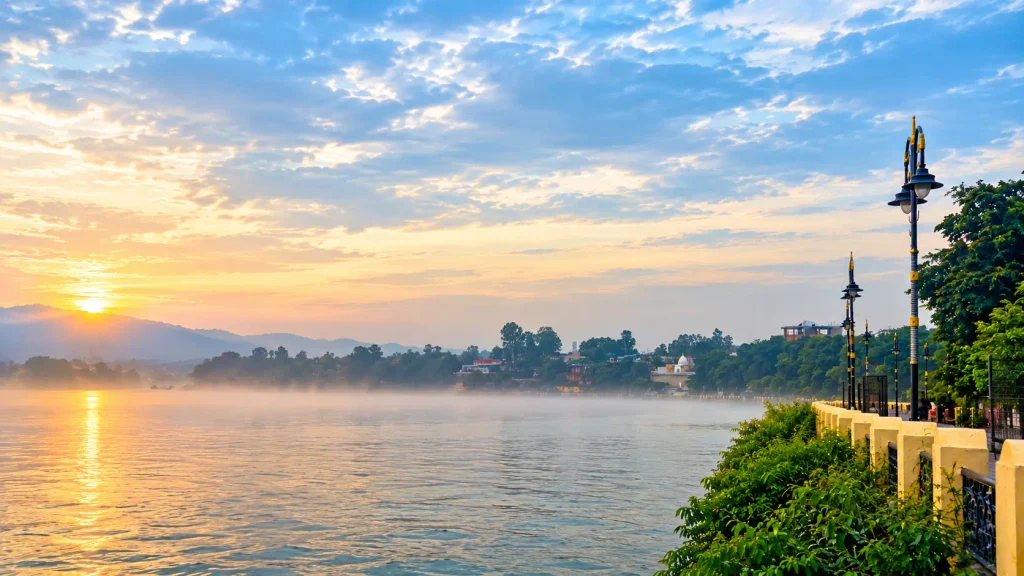
A quieter alternative to peak winter, with warming days but nights still comfortable. The river stays relatively calm, crowds thin out noticeably after February, and this stretch tends to be underrated for travelers who want the winter experience without the winter prices.
May to June
The hottest months, with daytime temperatures that can make outdoor activity uncomfortable by midday. The river runs lower and narrower here than at any other point in the year. This isn’t necessarily a bad time for a Ganga-view room specifically, since afternoons are often spent indoors anyway, but it’s not the season for long riverside walks.
July to September
Monsoon. This is the quietest season by far, tourism-wise, which has its own appeal if solitude matters more to you than clear skies. But it’s also when the river is at its widest and fastest, river-based activities like rafting are typically suspended for safety, and heavy rain can limit how much time you’ll actually spend outdoors. If a specific photo of a particular view matters to you, check whether it was taken in this season, since the river can look dramatically different from how it does in winter.
Best Season Specifically for a Ganga-View Room
If the room’s view is the main reason you’re booking, winter (December to February) generally gives the clearest, calmest water and the best visibility toward landmarks like Ram Jhula and Janki Setu. The post-monsoon window in October and November is a close second, with the added benefit of noticeably lower rates than peak December.
Monsoon months aren’t necessarily worse for a river view, the water is often more dramatic and the greenery along the banks is at its most vivid, but it’s a different kind of view: wider, louder, and less calm than the glassy winter river most photos show.
Matching the Season to What You’re Actually Looking For
For a quiet, restorative stay – October-November or March-April. You get calm water and comfortable weather without the peak-season crowds or prices.
For outdoor activities like rafting or trekking – September through May, outside of the monsoon suspension window. Check specific operator dates, since exact closures vary by year.
For a destination wedding – October through February is when most ceremonies happen here, largely because of the reliable weather, though this also means more activity and higher demand across venues during this stretch.
For genuine solitude, even if it means some rain – July-August, if you don’t mind limited outdoor time and are comfortable with the river running high.
A Few Practical Notes Before You Book
- Winter mornings and evenings can get cold enough to need a light jacket, even though daytime temperatures are comfortable.
- Summer afternoons are genuinely hot; plan outdoor sightseeing for early morning or late afternoon instead.
- Monsoon travel means checking road conditions in advance, since heavy rain occasionally affects routes into the hills beyond Rishikesh itself.
- Festival dates (Diwali, the International Yoga Festival, and other recurring events) shift year to year, so it’s worth checking exact dates for the year you’re traveling rather than assuming they’ll fall on the same weeks as last year.
Frequently Asked Questions
What’s the single best month to visit Rishikesh for a peaceful stay?
November and December tend to offer the best combination of calm water, comfortable weather, and manageable crowds, though December moves closer to peak season as the month goes on.
Does the river look different depending on the season?
Yes, noticeably. It’s calmest and clearest in winter, narrower in summer, and significantly wider and faster during and after monsoon (July to September).
Is monsoon a bad time to visit?
Not necessarily, it’s the quietest season and has its own appeal, but expect limited outdoor activity, suspended river rafting, and a wider, more turbulent river than the calm water most photos show.
When should I book if I want winter dates?
As early as possible. December through February is peak season, and riverside rooms with the best views are typically the first to fill.
Conclusion
There isn’t a single best time to visit Rishikesh, it depends on what peaceful actually means to you. If it means calm water and clear skies, winter delivers that most reliably, at the cost of higher prices and bigger crowds. If it means fewer people and a quieter town, the shoulder months of October-November or March-April offer a strong middle ground. And if solitude matters more than sunshine, monsoon has an appeal of its own, even if it comes with more rain and less time outdoors.
Whichever season you choose, it’s worth checking what the river actually looks like during that specific window before booking a room based on its view, since a photo taken in December won’t necessarily match what you’ll see in August.