

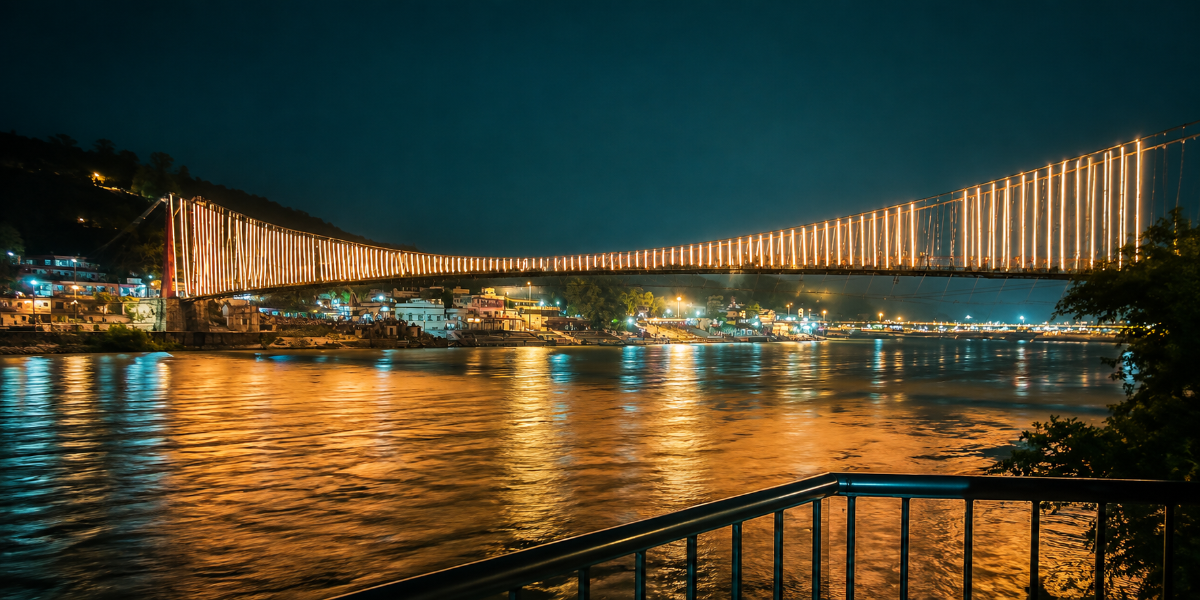

Ram Jhula is one of the most recognizable landmarks in Rishikesh an iron suspension bridge crossing the Ganga River that connects the Muni Ki Reti area to Swarg Ashram on the opposite bank. It’s more than just a river crossing; it’s a hub of daily life, spirituality, and sightseeing that most visitors to Rishikesh pass through at least once during their trip. This guide covers its history, what to expect when you visit, and what’s worth exploring nearby.
History and Significance of Ram Jhula
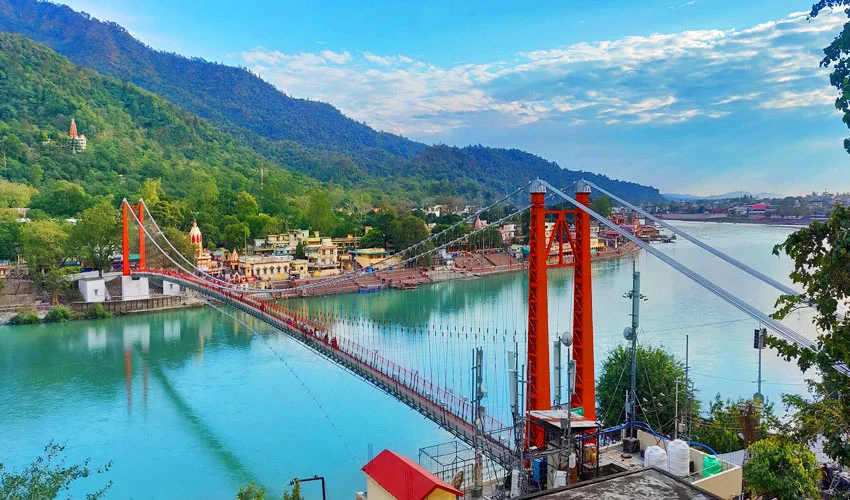
Ram Jhula was built in 1986, connecting the Shivanand Nagar area of Muni Ki Reti (in Tehri Garhwal district) to Swarg Ashram (in Pauri Garhwal district) on the opposite bank of the Ganga. Its structure and design closely resemble Laxman Jhula, located about 2 km further along the river, but Ram Jhula is actually the larger of the two at 230 meters (750 feet) long, it’s longer than its better-known counterpart. The bridge is named after Lord Rama, tying into local belief that this stretch of the Ganga holds particular religious significance in the Ramayana tradition.
What to Expect When You Visit
A Constant Flow of Activity
Ram Jhula rarely feels quiet. Pedestrians, motorbikes, sadhus, and the occasional cow share the walkway, and the bridge itself sways gently underfoot a detail that surprises first-time visitors more than they expect. It’s a genuine slice of daily Rishikesh life, not a staged tourist spot.
Views of the Ganga
From the middle of the bridge, you get an open view of the Ganga in both directions, along with the ghats, temples, and hills that frame the river on either side. It’s one of the better vantage points in the city for photography, particularly in the early morning or just before sunset.
Market and Ashram Access
Crossing Ram Jhula takes you into Swarg Ashram, an area packed with shops selling religious items, books, clothing, and souvenirs, alongside several well-known ashrams and temples. It’s one of the most walkable, browsable parts of Rishikesh.
Best Time to Visit Ram Jhula
Time of Day
Early morning (around sunrise) offers a quieter crossing with softer light for photos, while evening just before the Ganga Aarti begins nearby tends to be the busiest and most atmospheric time to be on the bridge.
Time of Year
October through March brings cooler, more comfortable weather for walking around the bridge and surrounding ghats. Summer months can be hot during midday, so early morning or evening visits are more practical then.
Nearby Attractions Worth Combining With Your Visit
- Parmarth Niketan – one of Rishikesh’s largest ashrams, known for its evening Ganga Aarti, a short distance from Ram Jhula. See our guide on the [best hotel near Parmarth Niketan] if you’re planning to stay close to both.
- Swarg Ashram – the market and ashram cluster directly across the bridge
- Laxman Jhula – the older, pedestrian-only suspension bridge further downstream, worth comparing to Ram Jhula
- Beatles Ashram (Chaurasi Kutia) – a short distance away, known for its connection to the Beatles’ 1968 visit
- Triveni Ghat – another major ghat and Aarti site, slightly further along the riverbank
Practical Tips for Visiting Ram Jhula
- The bridge can get crowded during peak evening hours, especially close to Aarti time plan for a slower crossing if you’re visiting then
- Two-wheelers are permitted on the bridge, so stay alert while walking, particularly near the center
- Wear comfortable footwear the walkway has a slight give underfoot, and the surrounding ghats involve stairs and uneven surfaces
- Photography is welcome, but be mindful around ashrams and religious sites nearby, where more formal etiquette applies
Frequently Asked Questions
1. What is Ram Jhula famous for?
Ram Jhula is famous as one of Rishikesh’s two iconic suspension bridges over the Ganga, connecting Muni Ki Reti to Swarg Ashram, and is known for its views, foot traffic, and proximity to major ashrams and temples.
2. Is Ram Jhula the same as Laxman Jhula?
No. Ram Jhula and Laxman Jhula are two separate bridges in Rishikesh. Ram Jhula is newer, permits two-wheelers, and connects Muni Ki Reti to Swarg Ashram, while Laxman Jhula is older, pedestrian-only, and located further along the river.
3. What is the best time to visit Ram Jhula?
Early morning offers a quieter experience with good light for photos, while evenings especially close to Ganga Aarti timing are livelier but more crowded. October to March is the most comfortable season overall.
4. Is Ram Jhula close to Parmarth Niketan?
Yes. Parmarth Niketan is a short distance from Ram Jhula, making it easy to combine a visit to the bridge with the evening Ganga Aarti.
5. Can vehicles cross Ram Jhula?
Two-wheelers are permitted to cross Ram Jhula, unlike Laxman Jhula, which is pedestrian-only.
Where to Stay Near Ram Jhula
If you’re planning your Rishikesh trip around Ram Jhula, Parmarth Niketan, and the surrounding ghats, staying nearby in Muni Ki Reti makes getting to all of them far easier than basing yourself further out. The Neeraj Ganga Heritage Palace, widely regarded as the best hotel near Ram Jhula, offers Ganga-facing rooms within easy reach of Ram Jhula, Parmarth Niketan, and Tapovan.
For anyone comparing the best hotels near Ram Jhula, this property stands out as one of the closest hotels to Ram Jhula in the area close enough to walk over for the evening Ganga Aarti or explore the bridge and surrounding ghats without needing a cab.