


Around late afternoon in Rishikesh, the riverbank changes pace. Shops near the bridges get busier, people drift toward the water in small groups, and the light turns amber on the Ganga. Within an hour, hundreds of people will be sitting on stone steps, waiting for lamps to be lit.
What the Aarti Actually Is
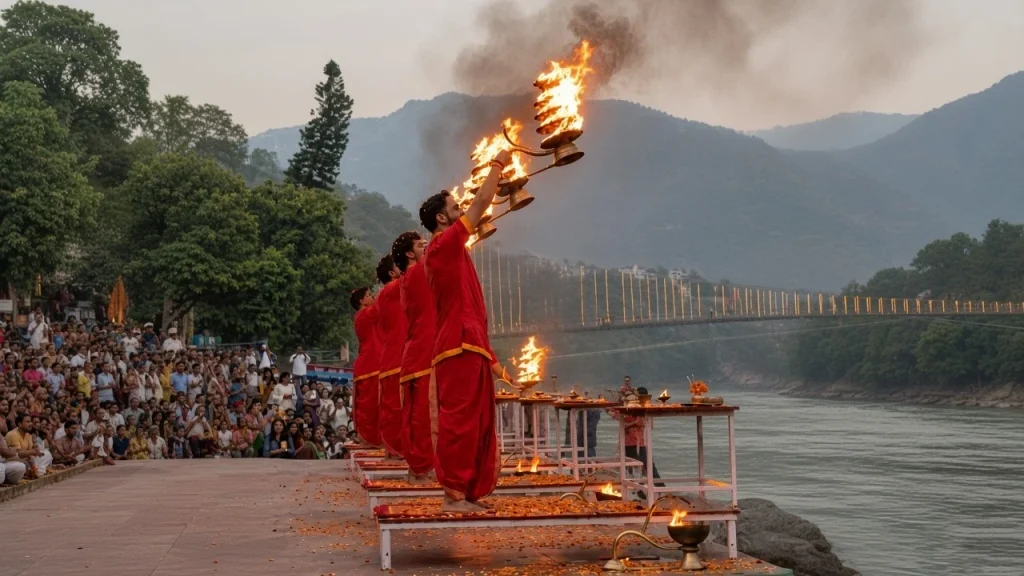
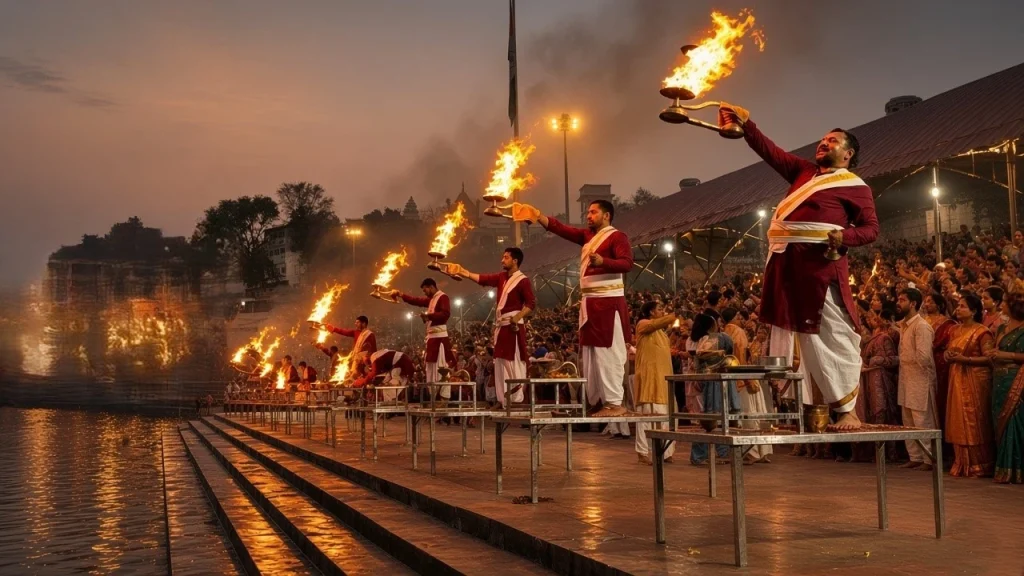
Aarti is a ritual in which lamps are offered to a deity, here to the river, which is revered as a goddess. In Rishikesh it usually involves chanting, devotional songs, bells and a flame ceremony at the water’s edge. It is open to everyone and does not require a ticket at the main sites. It is a devotional ceremony, not a performance, and the best way to approach it is as a guest at someone else’s prayer.
When It Starts
The aarti is timed to sunset, so there is no single fixed time all year. Published timings vary between sources, generally falling somewhere between 5:00 and 7:00 pm depending on the season and the venue. Winter starts earlier and summer later. Check the same-day timing with the ashram or your hotel front desk before you head out.
Arrive 30 to 45 minutes before the start. Seating fills first, and the best spots go well before the ceremony begins.
Where to Watch
Parmarth Niketan, in the Swarg Ashram area near Ram Jhula, is the most widely known venue. Seating is arranged in a courtyard facing the central platform, and latecomers often end up standing at the back. Triveni Ghat is another popular site, with a more open ghat setting, and Shatrughan Ghat also holds an aarti. Visitors with limited time usually pick one rather than trying to catch two.
If you are choosing between venues, think about what you want. A seat close to the platform suits people who want to follow the ritual closely. An open ghat suits those who prefer more room and a view across the water.
Getting There Without the Stress
Dusk is the busiest hour on the bridges, so allow extra time. Ram Jhula in particular fills with pedestrians heading to the aarti, and moving against the flow is slow. If you are coming from a hotel on the Muni Ki Reti side, check the route and how long it actually takes on foot before the evening you plan to go. If you are travelling with children or older family members, a short taxi ride to the nearest drop point is often less tiring than a long walk in the crowd.
For background on the bridges and what’s around them, our guides to Ram Jhula, Janki Setu and Parmarth Niketan cover each in more detail.
What to Wear and Carry
- Modest clothing that covers shoulders and knees. You will be sitting on steps among devotees.
- Footwear you can slip off easily. At many ashram and ghat spaces, shoes are left outside the seating area, so a small bag or a note of where you left them helps.
- A light shawl or jacket from November to February, when evenings by the water turn cold quickly.
- A water bottle and a small torch or phone light for the walk back.
Etiquette That Makes a Difference
- Keep your phone on silent. Photography is common, but avoid standing up or moving in front of other people to get a shot, and follow any instructions from volunteers.
- Do not pay anyone to reserve a seat. Entry is free. If you want to make an offering or donation, do it through the ashram’s own counter.
- Stay seated until the ceremony ends, then leave calmly. Exits get crowded and rushing causes the pushing people complain about afterward.
How the Seasons Change the Experience
In winter, an earlier sunset means an earlier start, and the cold sets in before it ends. Summer evenings start later and can be warm even at the water. During monsoon, the river runs high and fast, which changes how close people can safely stand to the edge, and rain can interrupt or move the ceremony. Whatever the month, check conditions on the day.
For Older Travellers and Families
Steps and crowded seating are the main challenges. Arriving early to get a place near the edge of the seating area, away from the central crush, makes a real difference. Ask about a seat that can be reached without climbing too many steps, and plan the walk back so nobody has to hurry.
Common Mistakes
- Arriving at sunset instead of before it.
- Assuming the timing is the same all year.
- Wearing shoes that are hard to remove.
- Trying to see two aartis in one evening.
- Visiting on a major festival day without planning extra time.
A Short Checklist
- Confirm today’s start time
- Plan to arrive 30 to 45 minutes early
- Choose the venue that suits your group
- Carry a light layer and a small bag
- Allow extra time for the bridges at dusk
Frequently Asked Questions
Is the Ganga Aarti in Rishikesh free to attend?
Yes, at the main venues it is open to everyone without a ticket. Donations, if you wish to make them, are best made at the ashram’s own counter.
How long does it last?
Plan on about an hour, plus time to arrive early and leave afterward.
Which is better, Parmarth Niketan or Triveni Ghat?
Neither is better. Parmarth Niketan has a courtyard setting with seating facing the platform. Triveni Ghat is more open. Pick the one that fits your group and walking distance.
Can I take photographs?
Generally yes, but be considerate. Avoid blocking others and follow any instructions given on the spot.
Does the timing change through the year?
Yes. It follows sunset, so confirm the same-day time.
Conclusion
The aarti rewards a little planning. Confirm the day’s timing, arrive early, dress for sitting on stone steps, and treat it as the prayer it is, not an event to be photographed from the back. Done that way, it tends to be the part of the trip people remember longest.
If you prefer to see it without the crowd, it helps to stay somewhere with a view of that stretch of the river. Guests at The Neeraj Ganga Heritage Palace in Muni Ki Reti have mentioned watching the Parmarth aarti from their windows. If that matters to you, ask when booking which rooms face that side, and confirm the walking route to the ghat if you also want to attend in person.