

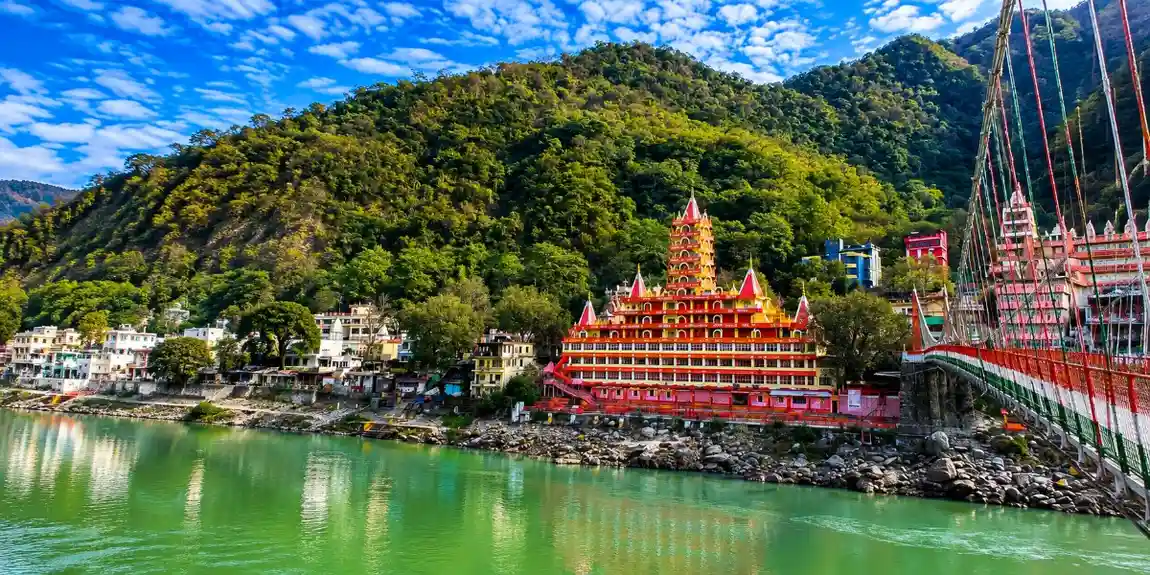

Laxman Jhula is one of Rishikesh’s most iconic landmarks – a century old iron suspension bridge across the Ganga connecting Tapovan to Jonk. As of 2026, the bridge remains closed to pedestrian and vehicle crossing, a status that’s been in place since 2019 due to structural safety concerns. It’s still very much worth visiting for its history and views, but it’s important to know before you go that you can look at it, not cross it. This guide covers its history, current status, and what to do in the area today.
History of Laxman Jhula
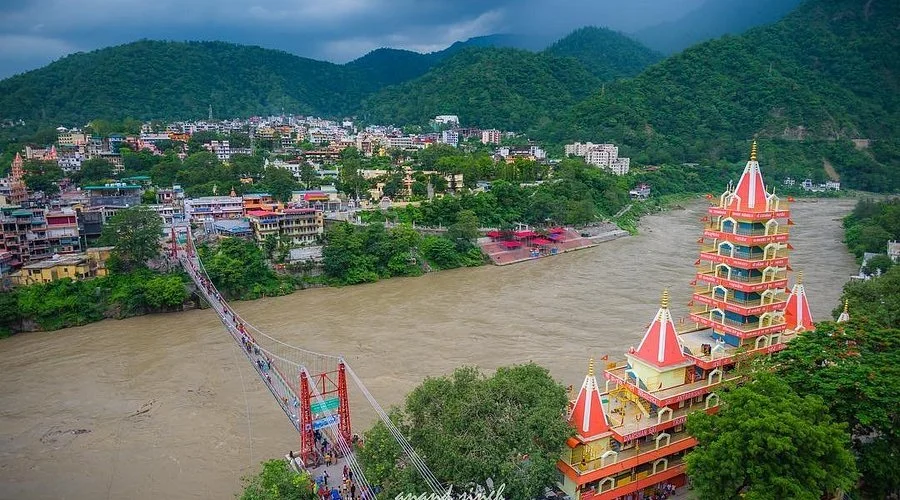
The bridge’s foundation was laid in 1923, but the structure was destroyed in the devastating floods of 1924 before it could be completed. It was rebuilt between 1927 and 1929, and the iron suspension bridge was finally completed and opened to the public on 11 April 1930. It stretches 450 feet (137 meters) across the Ganga at a height of roughly 70 feet above the river, connecting Tapovan, in Tehri Garhwal district, to Jonk, in Pauri Garhwal district.
Its name comes from local legend: it’s believed that Lakshman, the younger brother of Lord Rama, crossed the Ganga at this exact spot using a jute rope during the events of the Ramayana. The bridge was built to honor that legend, and it went on to become one of the most photographed landmarks in Rishikesh for nearly a century.
Current Status: Why Laxman Jhula Is Closed
Laxman Jhula was closed to all pedestrian and vehicle traffic on July 12, 2019, after an inspection found the aging iron structure could no longer safely support its usual load. As of 2026, there is still no official reopening date, and the bridge deck remains closed to crossing. The surrounding area, however, is open, and visitors can still view the bridge and enjoy the atmosphere of the neighborhood around it.
Bajrang Setu: The New Bridge Nearby
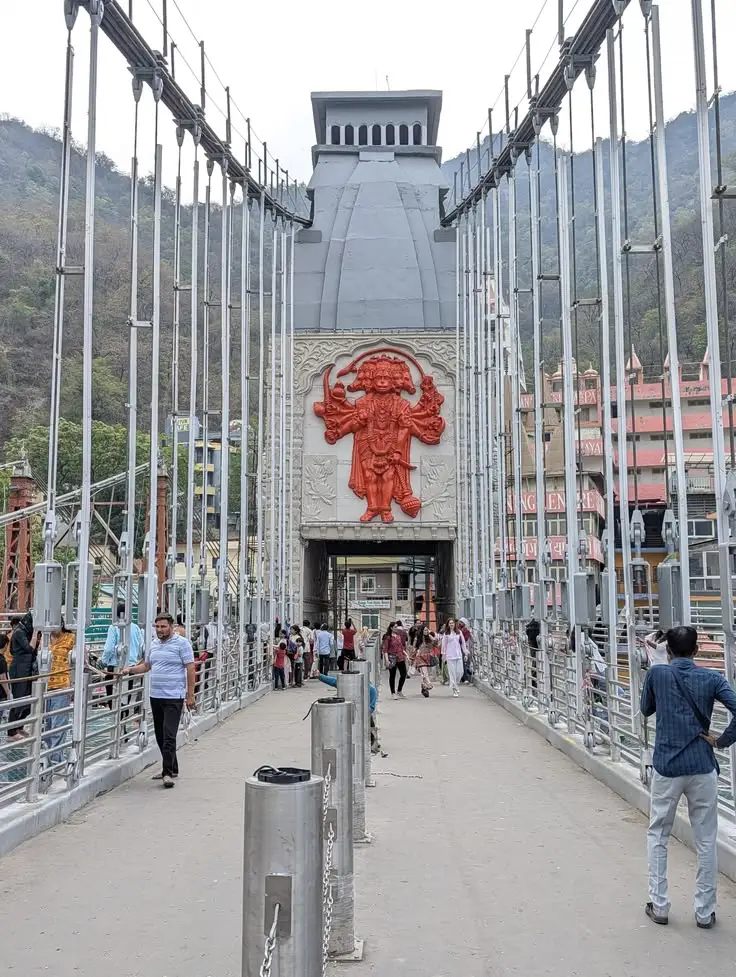
To fill the connectivity gap left by Laxman Jhula’s closure, a new bridge called Bajrang Setu was built roughly 200 meters upstream and opened in 2026. It’s a modern cable suspension bridge with glass-floor sections, offering a similar river crossing experience with updated safety standards. If you want the experience of crossing the Ganga on foot near Tapovan today, Bajrang Setu is now the way to do it see our guide on [hotels near Bajrang Setu] for more on staying in this area.
What to Do Near Laxman Jhula Today
View the Bridge from the Ghats
Even though you can’t walk across it, the bridge is still a striking sight from either bank, particularly in the early morning or at golden hour, when the surrounding market lanes come alive with vendors and the light on the river is at its best.
Explore Tapovan’s Cafés and Market Lanes
The neighborhood around Laxman Jhula remains one of the liveliest parts of Rishikesh, with cafés, yoga studios, and shops selling books, clothing, and religious items worth a slow walk regardless of the bridge’s status.
Visit Nearby Temples
The Trayambakeshwar (Terah Manzil) Temple, a multi-story temple close to the bridge, remains open and is a popular stop for visitors exploring the area.
Walk the New Ram Jhula–Bajrang Setu Loop
Since Bajrang Setu opened, it’s become possible to walk a full loop for the first time since 2019: cross Ram Jhula, walk along the east bank to Swarg Ashram, cross back via Bajrang Setu, and finish at the Tapovan market near the Laxman Jhula viewpoint. It’s become one of the more popular self-guided routes in the area.
Best Time to Visit
October through March offers the most comfortable weather for walking around the ghats and market lanes near Laxman Jhula. Early morning is quieter and better for photography, while evening closer to Ganga Aarti time nearby is livelier and more atmospheric.
Frequently Asked Questions
1. Is Laxman Jhula open in 2026?
The bridge itself remains closed to pedestrian and vehicle crossing, a status in place since July 2019 due to structural safety concerns. The surrounding area and viewpoints are open to visitors.
2. Can I still see Laxman Jhula even though it’s closed?
Yes. While you can’t cross the bridge, it’s still visible and photographable from the ghats and market lanes on either bank.
3. What replaced Laxman Jhula as a river crossing?
Bajrang Setu, a new bridge built about 200 meters upstream, opened in 2026 and now serves as the pedestrian crossing in this part of Rishikesh.
4. How old is Laxman Jhula?
The current bridge opened to the public on 11 April 1930, after its 1923 foundation was destroyed in the 1924 floods and rebuilt between 1927 and 1929 making it nearly a century old.
5. Why is Laxman Jhula called by that name?
It’s named after Lakshman, the younger brother of Lord Rama, who is believed to have crossed the Ganga at this spot on a jute rope during the events of the Ramayana.
Distance from The Neeraj Ganga Heritage Palace
The Neeraj Ganga Heritage Palace, located on NH58, Badrinath Highway in Muni Ki Reti, is approximately 3–4 km from Laxman Jhula, roughly a 10–15 minute drive depending on traffic. It’s a similar distance to Bajrang Setu, making the hotel a convenient base for visiting both. Guests can reach the area by auto, cab, or a longer scenic walk along the riverside road.
Where to Stay Near Laxman Jhula and Bajrang Setu
If you’re planning to explore this part of Rishikesh Laxman Jhula, Bajrang Setu, and the Tapovan market staying nearby in Muni Ki Reti keeps everything within easy reach. The Neeraj Ganga Heritage Palace offers Ganga-facing rooms close to Bajrang Setu, Tapovan, and Parmarth Niketan.